Texas LLC Annual Report Late Penalty: No $50 Fee on a Late PIR for Small LLCs
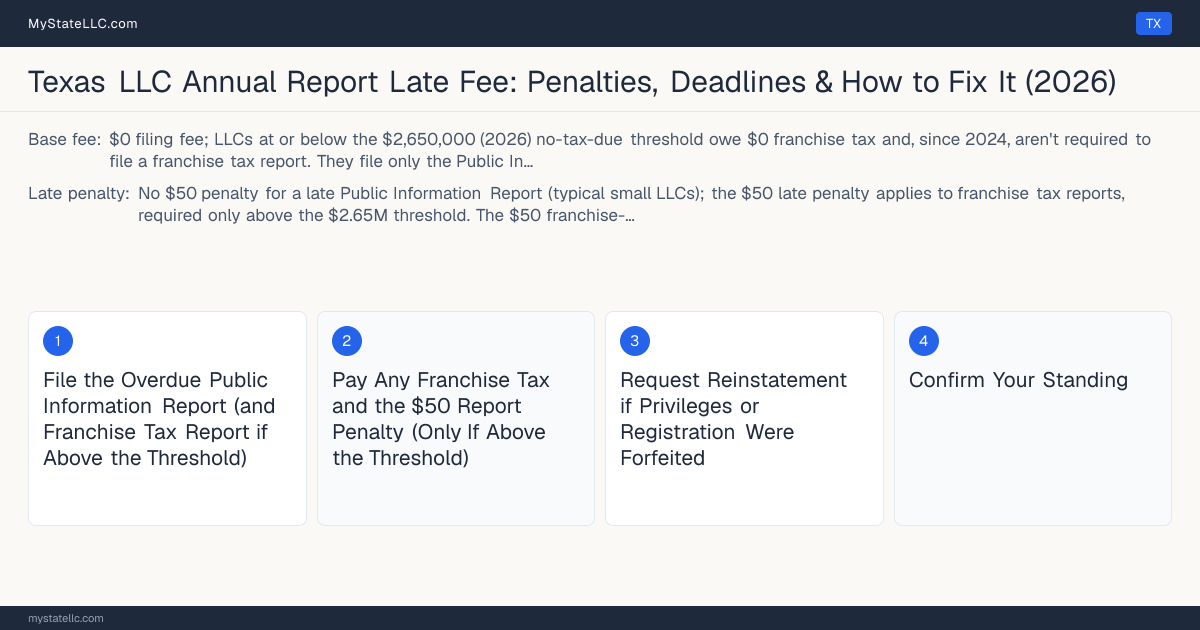
Texas LLCs file no Secretary of State annual report. They file with the Comptroller by May 15. A below-threshold LLC files only a Public Information Report (PIR), and Texas doesn't charge the $50 late-filing penalty on a late PIR. The $50 penalty applies to late Franchise Tax Reports, which only LLCs above the $2.65M no-tax-due threshold must file.
By Edmond Hui · Last updated: August 2026
Late Fee Facts at a Glance
What Happens If You Miss the Deadline
Immediately after May 15 deadline
Your annual filing is delinquent. If your LLC is below the $2.65M no-tax-due threshold, you only file a Public Information Report, and Texas doesn't charge the $50 late-filing penalty on a late PIR. The $50 penalty applies to late franchise tax reports (even when no tax is owed), which below-threshold LLCs aren't required to file since 2024. If your LLC is above the threshold and its franchise tax report is late, the $50 penalty applies, plus a 5% penalty on any tax owed.
About 30 to 60 days after deadline
If franchise tax is owed and paid more than 30 days late, the penalty rises to 10% of the tax, and interest begins accruing (roughly 61 days after the due date). The Comptroller sends notices warning of forfeiture for continued non-compliance. This applies to any LLC that hasn't filed its required report, including a below-threshold LLC that skipped its PIR.
Continued non-filing
The Comptroller forfeits the LLC's corporate privileges (loss of the right to transact business and to sue or defend in Texas courts, and possible personal liability for members/managers), and ultimately forfeits the LLC's registration/charter, with loss of good standing and liability protection. This is the real risk for a below-threshold LLC: not a $50 fee, but forfeiture for chronic non-filing.
How to Fix It: Step-by-Step
File the Overdue Public Information Report (and Franchise Tax Report if Above the Threshold)
Log into the Texas Comptroller's eSystems portal at comptroller.texas.gov and file the delinquent Public Information Report (PIR, Form 05-102). Texas has no Secretary of State annual report. These Comptroller filings are the state's annual LLC requirement. A below-threshold LLC files only the PIR; since 2024 it's not required to file a franchise tax report. If your LLC is above the $2.65M no-tax-due threshold, also file the Franchise Tax Report.
Pay Any Franchise Tax and the $50 Report Penalty (Only If Above the Threshold)
If your LLC is below the threshold and files only a late PIR, Texas doesn't charge the $50 late-filing penalty. The $50 penalty applies to a late Franchise Tax Report, which only above-threshold LLCs must file, and it applies even if $0 tax is due. If your LLC owes franchise tax, also pay the 5% (1 to 30 days late) or 10% (more than 30 days late) penalty on the tax, plus interest.
Request Reinstatement if Privileges or Registration Were Forfeited
If the Comptroller forfeited your corporate privileges or registration, obtain a tax clearance letter (Form 05-391) once all reports and amounts are cleared, then file an Application for Reinstatement (Form 811) with the Texas Secretary of State along with the $75 reinstatement fee.
Confirm Your Standing
Use the Comptroller's free Certificate of Account Status lookup (or request a Certificate of Account Status / Good Standing) to verify your LLC is active and compliant, useful for banks, lenders, and contracts.
🚨 Reinstatement After Dissolution
- Reinstatement Possible?
- Yes
- How Long Allowed
- An LLC can generally reinstate after a franchise tax forfeiture once every past-due report, tax, penalty, and interest amount is cleared; confirm the current timing and any deadlines with the Texas Comptroller and Secretary of State
- Reinstatement Fee
- $75 Secretary of State reinstatement filing fee (Form 811), plus any past-due franchise tax, the $50-per-report late-filing penalty on any late franchise tax reports (above-threshold LLCs only), and any interest owed to the Comptroller
- What You Lose During Dissolution
- Good standing, and with it the certificate of good standing that banks, lenders and licensing bodies ask for. The LLC continues to exist for winding up, so this does not by itself void the liability shield, but the company cannot carry on ordinary business and its name protection is at risk until it is reinstated.
This guide is general information, not legal or tax advice, and reading it does not create an attorney-client relationship. It reports what each state publishes about filing deadlines, fees, and the consequences of missing them, with the sources this page cites. It cannot tell you what your own company owes: the date turns on when and where you formed, states change these rules between our reviews, and in several states an entity-level tax falls due in a year when no report does. Confirm your own dates with the filing office named on this page before you rely on one here, because the penalty for missing a deadline can be administrative dissolution of the company.
Frequently Asked Questions
Sources
Each entry below is a document recorded in our verified Texas sources, and each entry says what the document is. Some statutory text is read from an accurate mirror rather than from the state's own host, and those say so.
- sos.state.tx.us/corp/index.shtmlTexas Secretary of State: business entity filings
- statutes.capitol.texas.gov/Docs/TX/htm/TX.171.htmTexas statute: Public Information Report
- comptroller.texas.gov/taxes/franchise/pir-oir-filing-req.phpTexas agency guidance: Public Information Report
- comptroller.texas.gov/taxes/franchise/Texas Comptroller of Public Accounts: file the Public Information Report
Formation Services Compared
Forming an LLC in Texas?
See how Northwest Registered Agent, Bizee, ZenBusiness and LegalZoom, the formation services we partner with, compare on 3-year cost, BBB rating and Trustpilot score before you choose.

Edmond Hui · Founder, MyStateLLC
Edmond Hui is a software engineer and serial entrepreneur based in New York who has founded multiple online businesses across e-commerce, media, and information publishing. Before transitioning into tech, he spent years as a commercial real estate professional closing deals totaling over 100,000 square feet, giving him firsthand experience with business formation and entity structuring. He built MyStateLLC to provide the free, state-specific LLC guidance he wished existed when forming his own companies.