Ohio LLCs Don't File Annual Reports
Ohio requires no annual or biennial report from an LLC, so there is no recurring Secretary of State fee and no late penalty. Here is what you do have to keep current.
By Edmond Hui · Last updated: August 2026
Annual Report at a Glance
| Due Date | None required |
| Fee | No annual report required |
| Filing Method | Not applicable - Ohio doesn't require annual reports for LLCs |
| Late Penalty | None. Ohio LLCs file no annual report, so no penalty exists. |
| Sos Filing Url | https://www.ohiosos.gov/businesses/ |
How to File
- 1
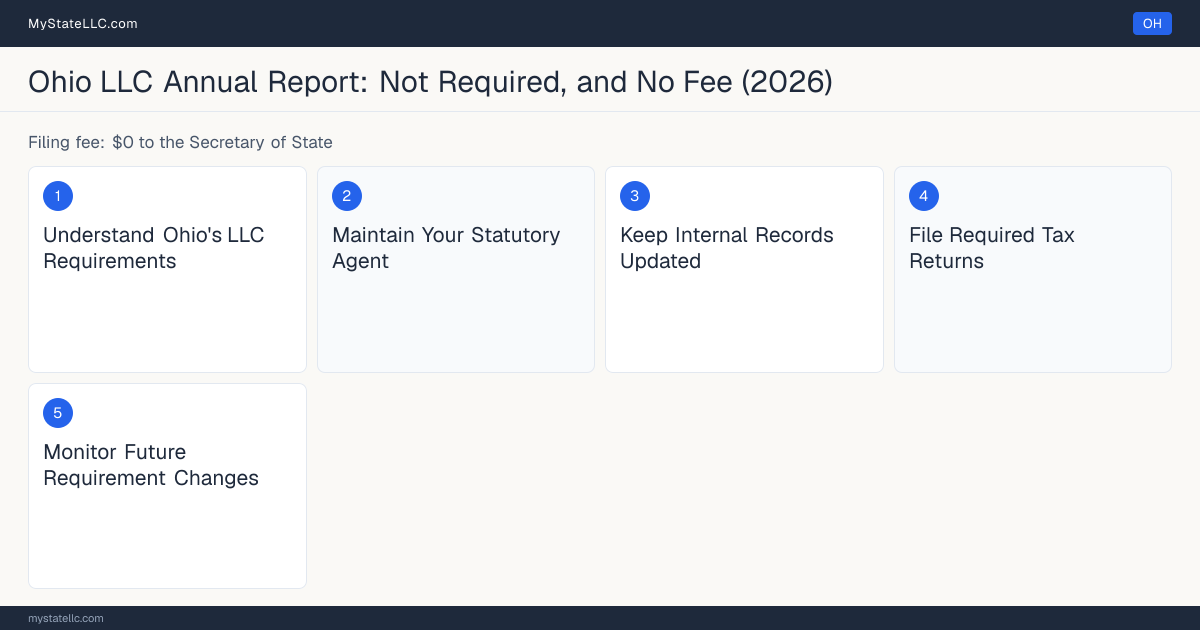
Understand Ohio's LLC Requirements
Ohio requires no annual or biennial report from an LLC, so there is no recurring Secretary of State filing and no late penalty. Your ongoing obligations are keeping a statutory agent on file, keeping accurate internal records, and filing the tax returns that apply to you.
- 2
Maintain Your Statutory Agent
Ohio calls the registered agent a statutory agent. Keep a current agent and Ohio address on file with the Ohio Secretary of State at https://www.ohiosos.gov/businesses/, and file an update whenever the agent or the address changes.
- 3
Keep Internal Records Updated
Maintain accurate operating agreements, member records, and financial documents. These are not filed with the state, but they are what proves the LLC is being run as a separate entity.
- 4
File Required Tax Returns
File your federal returns and any Ohio returns that apply. Ohio has no corporate income tax and no LLC report fee, but a pass-through entity with nonresident investors can have Ohio pass-through filing obligations, and the Commercial Activity Tax applies at 0.26% on taxable gross receipts above an annual exclusion of $6 million for 2025 and later years. A business at or below that exclusion is not required to file a CAT return.
- 5
Monitor Future Requirement Changes
Check the Ohio Secretary of State website at https://www.ohiosos.gov/businesses/ periodically for changes to LLC filing obligations, and keep any local licenses your city or county requires current.
This guide is general information, not legal or tax advice, and reading it does not create an attorney-client relationship. It reports what each state publishes about filing deadlines, fees, and the consequences of missing them, with the sources this page cites. It cannot tell you what your own company owes: the date turns on when and where you formed, states change these rules between our reviews, and in several states an entity-level tax falls due in a year when no report does. Confirm your own dates with the filing office named on this page before you rely on one here, because the penalty for missing a deadline can be administrative dissolution of the company.
Frequently Asked Questions
Sources
Each entry below is a document recorded in our verified Ohio sources, and each entry says what the document is. Some statutory text is read from an accurate mirror rather than from the state's own host, and those say so.
- ohiosos.gov/businesses/Ohio Secretary of State: business entity filings
- codes.ohio.gov/ohio-revised-code/chapter-1706Ohio statute: annual report exemption
- codes.ohio.gov/ohio-revised-code/section-5751.051Ohio statute: Commercial Activity Tax
- tax.ohio.gov/business/commercial-activity-taxOhio Department of Taxation: file the Commercial Activity Tax
Formation Services Compared
Forming an LLC in Ohio?
See how Northwest Registered Agent, Bizee, ZenBusiness and LegalZoom, the formation services we partner with, compare on 3-year cost, BBB rating and Trustpilot score before you choose.

Edmond Hui · Founder, MyStateLLC
Edmond Hui is a software engineer and serial entrepreneur based in New York who has founded multiple online businesses across e-commerce, media, and information publishing. Before transitioning into tech, he spent years as a commercial real estate professional closing deals totaling over 100,000 square feet, giving him firsthand experience with business formation and entity structuring. He built MyStateLLC to provide the free, state-specific LLC guidance he wished existed when forming his own companies.